
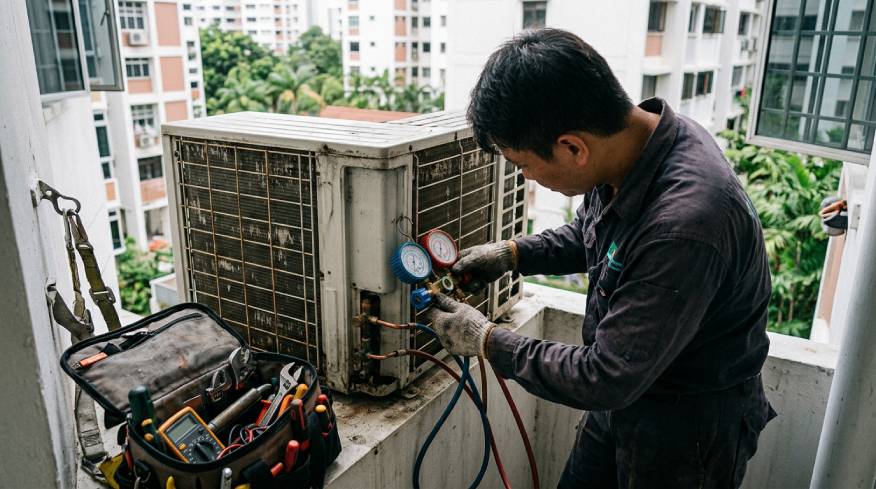
When an air conditioner starts blowing warmer air or takes much longer to cool a room, many homeowners immediately assume that the system needs more gas.
While low refrigerant can certainly affect cooling performance, aircon gas is not something that should normally disappear quickly during everyday operation.
If you are searching for aircon gas top up Woodlands, it is helpful to understand why refrigerant levels become low in the first place. Simply topping up the gas without identifying the underlying cause may only provide temporary improvement.
In many cases, low refrigerant is associated with leakage somewhere in the system. Proper inspection can help determine whether a gas top-up is enough or whether repair work is also required.
What Is Aircon Gas and Why Is It Important?
Aircon gas, more accurately known as refrigerant, circulates through the air conditioning system and helps transfer heat from inside your home to the outdoor environment.
As refrigerant moves between the indoor and outdoor units, it changes pressure and temperature. This process allows the system to absorb indoor heat and release it outside.
Without the correct refrigerant level, the aircon may struggle to cool efficiently.
Common refrigerants used in Singapore air conditioning systems include R22, R410A and R32, depending on the system model and age.
The correct refrigerant type must always be used. Different refrigerants are designed to operate under different conditions and should not be mixed.
Does Aircon Gas Naturally Run Out?
One common misconception is that aircon gas works like fuel in a vehicle and gradually gets used up.
In a properly sealed air conditioning system, refrigerant circulates continuously rather than being consumed during normal operation.
Therefore, if your aircon requires frequent gas top-ups, there may be another issue that needs attention.
Small amounts of refrigerant can sometimes be lost during servicing or repair work, but repeated or significant drops in refrigerant level often point towards a leak.
Before arranging another aircon gas top up Woodlands service, it is worth asking the technician to inspect the system for possible refrigerant loss.
Refrigerant Leaks Are a Common Cause of Low Aircon Gas
A leak is one of the main reasons refrigerant levels become insufficient.
Air conditioning systems consist of copper pipes, joints, valves, coils and other components that carry refrigerant under pressure.
Over time, leaks may develop because of ageing materials, corrosion, vibration or damage.
Leaking Pipe Connections
Aircon piping includes several joints and connections between indoor units and the outdoor condenser.
If these connections become loose or damaged, small amounts of refrigerant may gradually escape.
A minor leak might not cause an immediate breakdown. Instead, cooling performance may slowly become weaker over several weeks or months.
Damaged Copper Piping
Copper pipes can sometimes become damaged during renovation work, drilling or accidental impact.
Poorly installed piping may also be more vulnerable to stress and vibration.
If refrigerant escapes through damaged piping, topping up the gas without repairing the pipe will not permanently solve the problem.
Corrosion Around the Cooling Coil
Older aircon systems may develop corrosion around the evaporator or condenser coil.
In certain cases, this corrosion can eventually create tiny openings that allow refrigerant to leak.
Because these leaks may be difficult to see, proper aircon troubleshooting may be required to locate the source.
Poor Installation Can Contribute to Refrigerant Loss
The quality of the original installation can also affect refrigerant retention.
Incorrectly tightened flare joints, unsuitable piping work or poor workmanship may create weak points in the refrigerant circuit.
The system might perform normally at first but gradually lose refrigerant over time.
This is one reason why proper aircon installation is important. Experienced installers should make sure that refrigerant connections are properly secured and tested before completing the job.
If a relatively new aircon frequently requires gas top-ups, homeowners should consider having the original installation inspected.
Ageing Aircon Components May Develop Leaks
Air conditioners experience constant temperature changes, vibration and operating pressure.
As the system becomes older, seals, joints and coils can gradually deteriorate.
An older aircon that previously maintained its refrigerant level may eventually begin developing small leaks.
This does not automatically mean that the entire system must be replaced.
A technician should first determine where the refrigerant is escaping and whether the affected component can be repaired economically.
If several major parts are already deteriorating, however, homeowners may need to compare repair costs with replacement.
What Are the Signs of Low Aircon Gas?
Low refrigerant can produce several noticeable symptoms, although these symptoms can also be caused by other aircon problems.
One of the most common signs is weak cooling. You may notice that the system is still running, but the room takes much longer than usual to reach a comfortable temperature.
Other possible signs include:
- Air coming from the unit is not cold enough
- The aircon runs continuously without reaching the selected temperature
- Ice forms around the refrigerant pipe or indoor unit
- Electricity consumption appears higher than usual
- The outdoor unit operates for unusually long periods
- Hissing or bubbling sounds appear near refrigerant lines
These warning signs do not automatically confirm low refrigerant.
For example, an aircon not cold problem can also be caused by dirty filters, blocked coils, faulty sensors or compressor issues.
A proper diagnosis is therefore important before adding refrigerant.
Why Can Low Refrigerant Cause Ice to Form?
When refrigerant pressure becomes too low, the evaporator coil may become unusually cold.
Moisture from the surrounding air can then freeze on the coil or refrigerant pipe.
You may initially notice a thin layer of ice, which can gradually become thicker if the system continues operating.
However, low refrigerant is not the only cause of aircon freezing.
Restricted airflow caused by dirty filters or coils can create similar symptoms.
If you see ice forming repeatedly, switch the aircon off and arrange an inspection instead of simply adding more refrigerant.
Why Repeated Gas Top-Ups Should Be Investigated
An occasional refrigerant adjustment after repair work may be reasonable.
However, if your air conditioner needs another gas top-up only a short time after the previous one, the system should be checked for leakage.
Repeatedly adding refrigerant without repairing the source of the loss can become expensive and may allow the underlying problem to worsen.
A technician may inspect pipe joints, refrigerant lines, valves and coils to identify possible leakage.
Depending on the location and severity of the leak, repair may involve tightening a connection, repairing piping or replacing a damaged component.
Smart Cool’s Woodlands service information also notes that low refrigerant may indicate leakage and that the system should be assessed before a top-up is recommended.
Can Dirty Aircon Components Feel Like Low Gas?
Yes. Poor cooling does not always mean the refrigerant is low.
Dust accumulation on filters, evaporator coils and blower components can restrict airflow and reduce cooling performance.
A homeowner may assume that gas is needed when the actual solution is normal aircon servicing or deeper cleaning.
This is why technicians should inspect the overall condition of the aircon before recommending a gas top-up.
If normal servicing cannot remove stubborn internal buildup, an aircon chemical wash may be considered depending on the condition of the system.
Smart Cool currently offers normal servicing, chemical cleaning, gas top-up and troubleshooting services in Woodlands, which allows the system condition to be assessed before choosing the appropriate service.
What Happens During an Aircon Gas Check?
When you arrange an aircon gas top up Woodlands service, the technician should first assess the aircon rather than automatically adding refrigerant.
The inspection may include checking cooling performance, operating pressure and the condition of the refrigerant system.
If refrigerant levels are insufficient, the technician can determine the appropriate refrigerant type before carrying out the top-up.
Smart Cool lists R22, R410 and R32 gas top-up options as part of its current Woodlands aircon services.
If the pressure drops again after topping up, further leak detection may be necessary.
Should You Top Up Gas When the Aircon Is Not Cold?
Not immediately. If an aircon is running but not cooling properly, the cause should be diagnosed first.
Potential causes include:
- Low refrigerant
- Dirty filters
- Dirty evaporator coils
- Condenser problems
- Faulty fan components
- Sensor issues
- Compressor faults
Booking aircon troubleshooting first can help identify the actual problem and prevent unnecessary work.
Smart Cool provides troubleshooting in Woodlands for issues including weak cooling, water leakage, unusual noises, error codes and units that cannot switch on.
When Should Woodlands Homeowners Call a Technician?
Arrange an inspection when the aircon suddenly becomes less effective, develops ice, produces unusual sounds or repeatedly requires refrigerant.
Do not assume that every cooling problem requires more gas.
For homeowners looking for aircon gas top up Woodlands, the most important step is identifying why the refrigerant level has become low.
If there is a leak, repairing the cause before or together with the gas top-up can provide a more reliable solution.
Smart Cool provides gas top-up, troubleshooting, repair, servicing and other air conditioning services for homes and businesses in Woodlands. A professional assessment can help determine whether your system genuinely needs refrigerant or whether another issue is affecting its cooling performance.